Congress Avenue's First Rebuilt Blocks Are Open to Walk. Here's What They Show About the Rest of the Street.
October 15, 2026
October 15, 2026
On the City of Austin's project map, the 100 block of Congress Avenue between Cesar Chavez and Second Street is now marked "substantially completed." So is the south side of the Cesar Chavez intersection. Construction on the Congress Avenue Urban Design Initiative began January 28, 2026. The first phase covers Cesar Chavez to Seventh Street and is targeted for summer 2027.
The finished block is a good place to see the new benches, planters and bike lanes. It is a poor guide to how much the avenue will change. According to the Austin American-Statesman, the project adds protected bike lanes, trees and wider sidewalks without removing any driving lanes. Since the lanes stay, the new room has to come from somewhere else, mostly the angled parking bays. The blocks that lose the most parking will change the most, and the first finished block isn't one of them.
The city uses "substantially completed" in a specific way. It means the expanded pedestrian space, upgraded bikeways, new planting areas and roadway are finished. Landscaping and tree lighting can keep going through later phases. Bare planting beds on the 100 block don't mean the work has stalled. They're the planned last step.
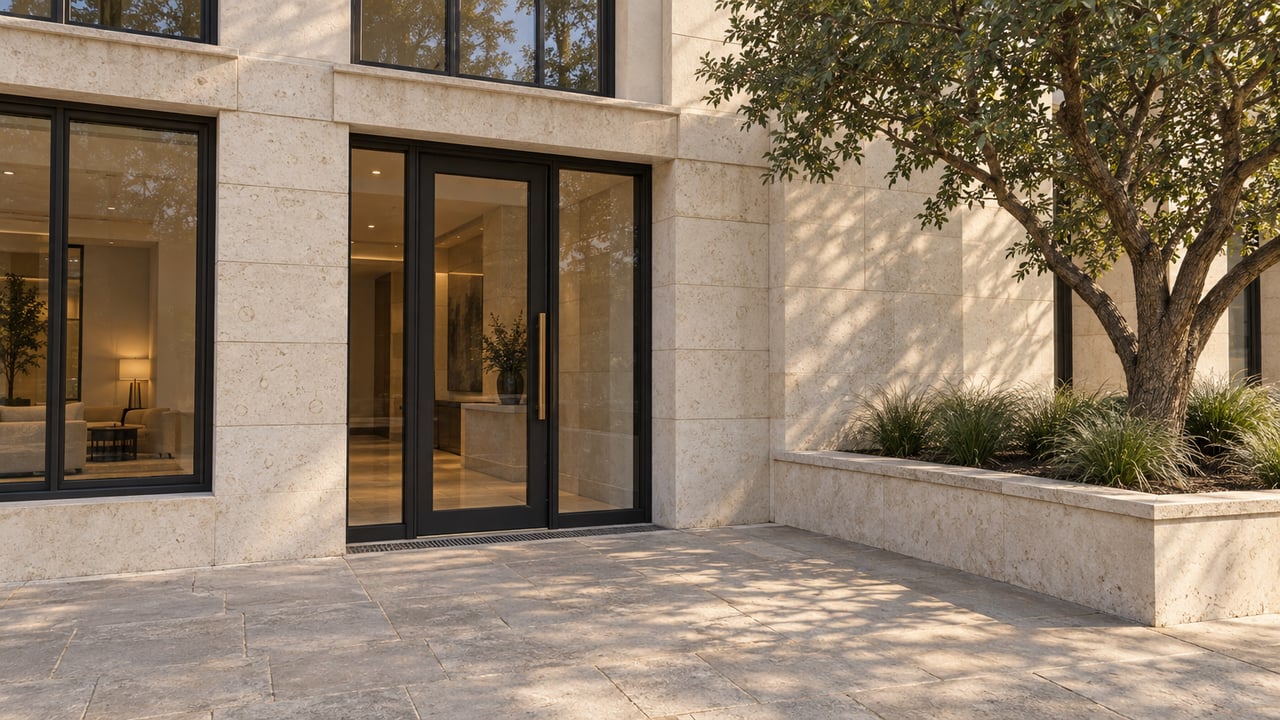
On this block, the design widens the bike lanes and moves them up behind the curb. It also adds a southbound right-turn lane at Cesar Chavez, plus planting areas, benches, bike racks and trash and recycling bins. If you walk the block from Patika Coffee in the 100 Congress lobby to Fareground at 111 Congress, you'll see most of the new street furniture the whole project will use. Fareground's vendors include Ciccio Bomba, Taco Pegaso, Desnudo, Austin Rotisserie and Shawarma Point.
This block got a new turn lane, and none of its parking-bay changes are what define the blocks to the north. It previews how the new avenue looks. The bigger gain in walking space comes farther up the street.
The city estimates the project removes 37 on-street parking spaces, most of them angled. Accessible spaces generally stay, though some may move. Two parallel-parking pockets on the west curb, one on the 200 block and one on the 600 block, stay in place for rideshare and drop-off. Set those 37 spaces against zero lost driving lanes, and you can see the trade the city made. Parking gives up curb space so foot and bike traffic can have it.
Here's how the city describes each block:
| Block | What changes |
|---|---|
| 100, Cesar Chavez to Second | Wider bike lanes rebuilt behind the curb, southbound right-turn lane at Cesar Chavez, planting areas, benches, bike racks |
| 200, Second to Third | New planting areas, concrete barriers replace flex posts along the bikeway |
| 300, Third to Fourth | Concrete bikeway barriers, parking bays become pedestrian space |
| 400, Fourth to Fifth | Concrete bikeway barriers, parking bays become pedestrian space |
| 500, Fifth to Sixth | Five vehicle lanes remain, with center left-turn lanes at Fifth and Sixth; elevated bikeway; parking bays become pedestrian amenity zones |
| 600, Sixth to Seventh | Parking bays become pedestrian space, concrete bikeway barrier that weaves behind the One American Center drop-off |
Across all of these blocks, the new planting areas are meant to give existing and replacement trees more soil. The city's block descriptions don't give sidewalk widths in feet. They describe the pedestrian zones as expanded and link to separate cross-section drawings.
The parking-bay conversions start on the 300 block. Coming up from the river, that's where the sidewalk gets noticeably wider, not just better furnished. Tacodeli at 301 Congress sits at the south end of that stretch. The 400 block runs to Mexic-Arte Museum at the southeast corner of Fifth Street, and it gets the same conversion.
The 500 block, between Fifth and Sixth, gets its own design. It keeps five vehicle lanes, with center left-turn lanes at both cross streets. Its bikeway is raised instead of set behind a barrier, and its parking bays become what the city calls pedestrian amenity zones. On the 600 block, the bikeway curves behind the One American Center drop-off zone, so cars pulling up to the tower don't cross the bike path.
The design also sets aside what KXAN described as storefront activation zones, space for outdoor café seating and merchandise displays. Those zones are part of the permanent plan. None of the reporting so far names a business that has started using one.
The 200 block is where the project's routine became visible. KXAN reported on August 25 that drivers could no longer turn left onto Second Street, that one southbound lane was closed and that both northbound lanes stayed open. The project follows the same pattern from block to block:
As for where crews are now, the latest confirmed location dates to September 9. In a report published September 12, the Statesman said that as of that Wednesday, crews were working on the west side of the 200 block. The 200 block was expected to finish that month, with the west side of the 300 block up next. No October update has confirmed the move. The city's map warns that phasing can change for special events or unforeseen problems, so the 300 block is the next scheduled stop, not a confirmed location. Fogo de Chão, on the ground floor of the Austonian at 200 Congress, sits on the block that should be wrapping up.
The Downtown Austin Alliance runs a Construction Impact Relief Grant for local storefronts directly affected by construction. It offers funding, technical help, marketing support, signage and temporary installations. In its first year, the program awarded $80,000 to eight local businesses, according to the Alliance's 2025–2026 annual report. The Alliance hasn't said whether any of those businesses are on Congress.
Two large events land on the avenue this season, and they relate to the construction zone in different ways.
The Texas Book Festival is listed on the city's event page for November 14 and 15, 2026, from 10 a.m. to 5 p.m., on Congress Avenue. The city posts separate closure documents for it. That listing says nothing about how the festival and the construction will be coordinated. The project's general rule, that work schedules can shift around special events, is the only guidance so far.
The Holiday Sing-Along & Stroll is on Saturday, December 5, from 5 to 8 p.m., according to the Downtown Austin Alliance, which says more details are coming. The Alliance's events calendar lists it as the 32nd annual Stroll, with the Capitol tree lighting, live music, food and artisan vendors. Visit Austin's event listing still uses last year's "31st annual" wording, and it places the event on Congress between Eighth and 11th streets, the Stroll's usual footprint. That stretch is entirely north of Seventh Street, where the first phase ends, so the Stroll's usual footprint sits outside the construction zone.
The Book Festival sits inside the construction corridor and the Stroll sits just north of it. If the planned sequence holds through the holidays, people walking down from the tree lighting toward the river will pass the unfinished middle blocks before reaching the finished 100 block at the bottom.
If you own on or near Congress and want to talk through how a block's rebuild schedule might affect showing or listing timing, Morgan Malin watches this corridor closely and is glad to walk the avenue with you. Let's connect.
From pricing strategy to closing day, Morgan brings local expertise and white-glove service to every transaction. Let's find your next home.